Tu carrito está vacío


Stainless steel is the better material for water bottles in almost every category. It is more durable, does not affect taste, supports vacuum insulation, and lasts 5 to 10 years. Aluminium is lighter but dents easily, requires an inner lining that wears over time, and cannot hold vacuum insulation. For a bottle that performs well and lasts, 304 grade stainless steel is the clear winner.
Stainless steel and aluminium are the two most common metals used for reusable water bottles. They look similar on the shelf, but the differences in performance, safety, and longevity are significant. This guide compares them across every factor that matters so you can make an informed choice.
For a broader look at choosing a reusable bottle, see our best reusable water bottle guide. For insulation-specific comparisons, read our insulated vs non-insulated guide.
Food-grade 304 stainless steel, also known as 18/8 (18% chromium, 8% nickel), is the industry standard for premium water bottles. It is an alloy designed specifically to resist corrosion, maintain structural integrity, and remain chemically inert when in contact with water, juice, coffee, or any other beverage. It does not leach chemicals, does not require an inner lining, and does not affect the taste of your drink.
Aluminium is a softer, lighter metal that requires an inner lining (usually epoxy or BPA-free resin) to prevent the metal from reacting with the liquid inside. Without this lining, aluminium can oxidise and impart a metallic taste. The lining is the weak point: it can crack, peel, or degrade over time, especially with hot liquids or acidic drinks. Once the lining is compromised, the bottle should be replaced.
| Feature | Stainless Steel (304) | Aluminium |
|---|---|---|
| Durability | Excellent, dent-resistant | Dents easily |
| Taste neutrality | No taste transfer | Requires liner; risk of metallic taste |
| Inner lining needed | No | Yes (epoxy/resin) |
| Vacuum insulation | Yes (double-wall) | Not possible |
| Weight (500ml empty) | ~280 to 320g | ~150 to 200g |
| Corrosion resistance | Excellent | Moderate (depends on liner) |
| Hot drinks safe | Yes | Not recommended (liner risk) |
| Dishwasher safe | Body yes (top rack) | Usually not recommended |
| Typical UK price | £12 to 30 | £5 to 15 |
| Lifespan | 5 to 10+ years | 1 to 3 years |
| Recyclability | 100% recyclable | 100% recyclable |
| BPA risk | None (no liner) | Depends on liner quality |
Stainless steel is significantly harder than aluminium. Drop a stainless steel bottle and it might pick up a minor scuff. Drop an aluminium bottle and it will likely dent. Over time, these dents can compromise the seal of the lid and the integrity of the inner lining, leading to leaks and faster deterioration.
The 304 grade stainless steel used in ProWorks bottles is the same grade used in commercial kitchen equipment, surgical instruments, and food processing plants. It is designed to withstand repeated impacts, temperature changes, and daily use for years. For more on stainless steel quality, see our stainless steel water bottle guide.
304 stainless steel is chemically inert when in contact with water and common beverages. It does not leach any chemicals, does not absorb flavours, and does not develop a metallic taste even after years of use. This is why it is the standard material for food and beverage contact in professional kitchens worldwide.
Raw aluminium reacts with acidic liquids, which is why aluminium bottles always have an inner lining. The quality of this lining varies enormously between manufacturers. High-quality BPA-free linings perform well initially, but degrade over time, especially if you use the bottle for hot drinks or acidic beverages like fruit juice. Once the lining develops micro-cracks, you may notice a metallic taste, and the bottle should be replaced.
This is the single biggest functional difference between the two materials. Stainless steel can be manufactured as a double-wall vacuum insulated bottle, which keeps drinks cold for 24 hours and hot for 12 hours. Aluminium cannot support vacuum insulation because the material is too soft to maintain the structural integrity needed for a vacuum seal between two walls.
If temperature retention matters to you, stainless steel is the only option. Aluminium bottles are always single-wall, meaning your drink will reach room temperature within 1 to 2 hours. For a detailed breakdown of insulation performance, read our insulated vs non-insulated guide.

Aluminium's main advantage is weight. A single-wall aluminium bottle weighs roughly 40 to 50% less than a single-wall stainless steel bottle of the same capacity. For a 500ml bottle, that is roughly 150g (aluminium) vs 280g (stainless steel).
However, when you compare a double-wall insulated stainless steel bottle (which offers 24-hour temperature retention) against a single-wall aluminium bottle (which offers no insulation), the weight difference is the price you pay for dramatically superior performance. Most people find the extra weight negligible for everyday carry. If every gram counts, such as for ultralight backpacking, aluminium may still have a role.
Both materials are 100% recyclable, and both are significantly better for the environment than single-use plastic bottles. However, there are differences in their environmental profiles.
The most environmentally friendly bottle is the one you use for the longest time. Stainless steel's superior durability gives it the edge in lifetime environmental impact. For more on sustainability, see our reusable water bottle guide.
For a water bottle that lasts, tastes clean, insulates properly, and handles daily use without deteriorating, stainless steel is the superior material. Aluminium is lighter and cheaper upfront, but its reliance on an inner lining, inability to support vacuum insulation, and shorter lifespan make it the weaker long-term choice.
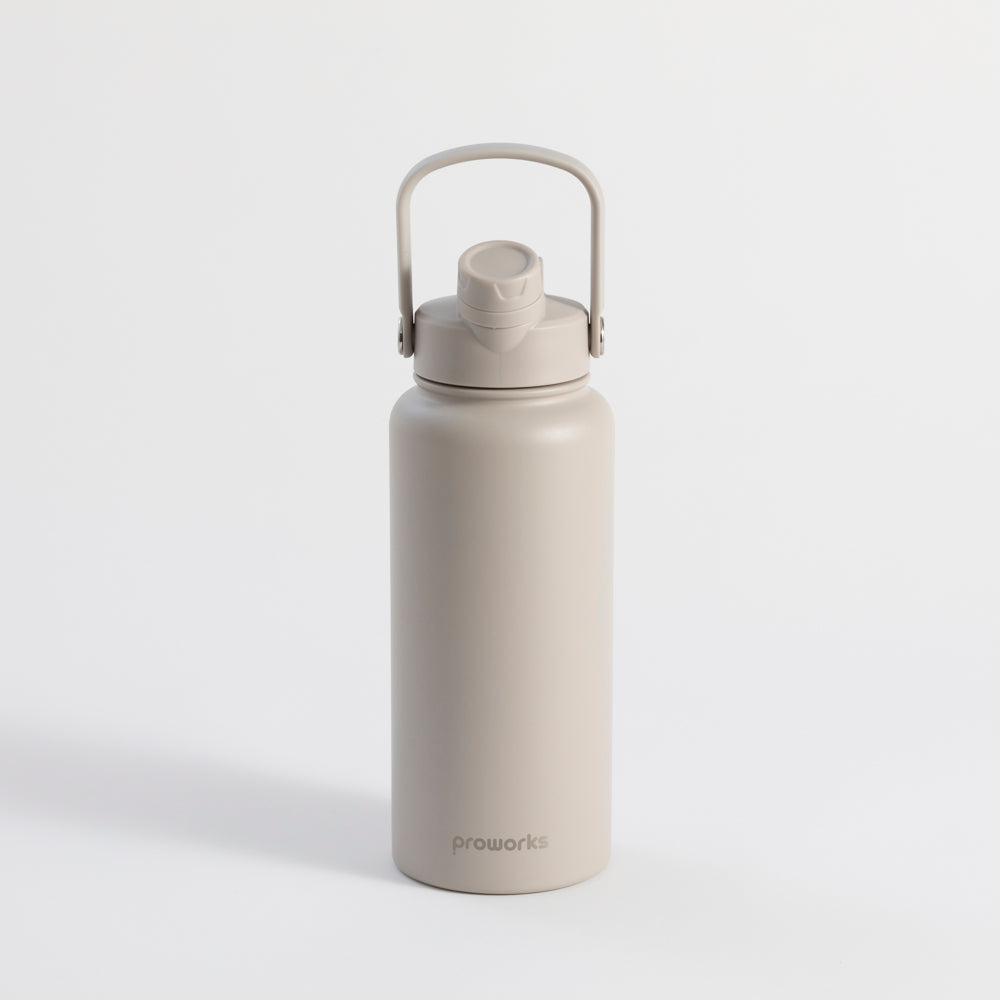
The ProWorks Switch 1L uses food-grade 304 stainless steel with no inner lining required. It keeps drinks cold for 24 hours, hot for 12, and is built to last years. Browse the full range of stainless steel water bottles or check our complete stainless steel guide for more options.
304 food-grade stainless steel. No inner lining. No taste transfer. Free UK delivery.
Shop Stainless Steel Bottles