
Tu carrito está vacío


















The short answer.
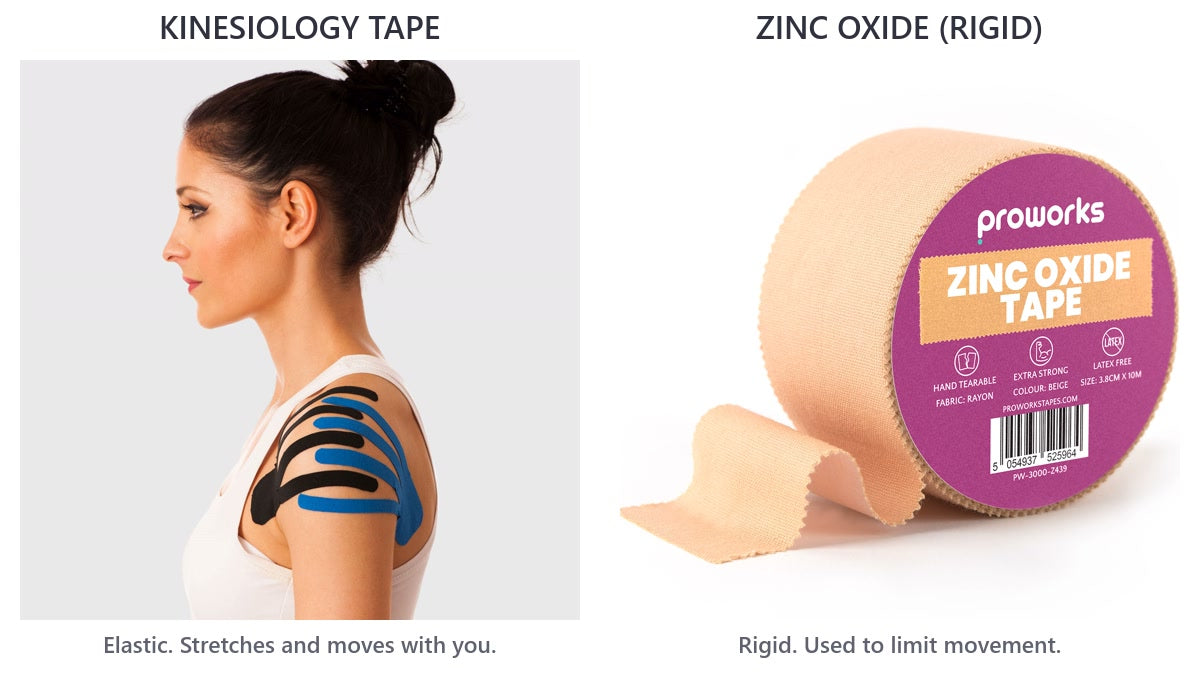
Kinesiology tape is elastic. It stretches and is generally worn while you move normally, often for several days.
Zinc oxide / rigid strapping tape does not stretch. It is typically used when the point is to limit a movement, and is usually applied for a single session.
Cohesive bandage stretches but sticks to itself rather than to skin, so it is generally used to hold dressings or padding in place.
“Sports tape” is not one product, and the words are used loosely - the same phrase can mean an elastic tape or a rigid one depending on who is speaking. This page sets out what physically separates the main types, using photographs of tape from our own range, and explains what all the different names actually refer to.
Kinesiology tape

The defining characteristic is elasticity. The tape is designed to stretch and recoil roughly in line with skin, which is why it can be worn during normal movement rather than restricting it. It adheres to skin with an acrylic adhesive that is activated by pressure and warmth, laid down in a wave pattern rather than a solid sheet - which is what allows it to breathe.
Composition and format vary between manufacturers. For the Proworks product specifically: 95% cotton, 5% spandex, supplied as an uncut 5 metre roll, 5cm wide, water resistant, latex free, in fourteen colours. It is cut with scissors, not torn by hand.
Because it is supplied uncut you cut each strip to the area you are taping - see how to cut kinesiology tape, where rounding the corners is the step that matters most for how long a strip lasts.
Zinc oxide and rigid strapping tape

Rigid tape has effectively no stretch. That is the entire point: where kinesiology tape is chosen so movement can continue, rigid tape is generally chosen where a movement is meant to be limited. It is what most people mean when they talk about “strapping” a joint, and it is usually applied for a session rather than worn for days.
It is also usually hand tearable, which is why you see it torn straight off the roll rather than cut - visible in the serrated edge above.

Note: the zinc oxide photographs on this page are from the Proworks product archive and are shown to illustrate what rigid tape physically is. Zinc oxide tape is not currently sold on this site - the product we sell is the kinesiology tape above.
Cohesive bandage
Cohesive bandage stretches, but the important difference is what it sticks to: itself, not skin. Wrapped around a limb it grips its own overlapping layers. That makes it useful for holding a dressing or padding in place, and it comes off without pulling at skin or hair. It is not a skin-adhesive tape and is not a substitute for either of the above.
Side by side
| Kinesiology | Zinc oxide / rigid | Cohesive | |
|---|---|---|---|
| Stretches | Yes | No | Yes |
| Sticks to | Skin | Skin | Itself |
| Cut or torn | Scissors | Usually hand tearable | Hand tearable |
| Typical wear | Days | A session | Hours |
| Effect on movement | Moves with you | Limits movement | Compresses / secures |
| Proworks example | 5m × 5cm, 95/5 cotton-spandex, 14 colours | 10m × 3.8 or 5cm, rayon, beige (archive) | - |
Scroll the table sideways on a phone. Category rows describe the general product types; the final row gives Proworks specifications only.
Which one do you need?
You want to keep moving
and wear it for a few days → kinesiology tape
You want a movement limited
for one session → rigid / zinc oxide strapping tape
You need to hold a dressing on
→ cohesive bandage
They are not mutually exclusive - rigid tape for a match and elastic tape between sessions is a common combination.
What all the different names mean
The vocabulary causes most of the confusion, so plainly:
- Sports tape and athletic tape - umbrella terms. They can mean either elastic or rigid. If a listing does not say whether it stretches, that is the question to ask.
- K tape, kinesio tape, physio tape, muscle tape - all refer to the elastic kind.
- Strapping tape and zinc oxide tape - the rigid kind.
- KT Tape, RockTape and similar - brand names for elastic tape, not separate categories.
Common questions
What is the difference between kinesiology tape and sports tape?
“Sports tape” is a general term that can cover both elastic and rigid tapes. Kinesiology tape is one specific type - the elastic one.
Is kinesiology tape the same as KT Tape?
KT Tape is a brand of kinesiology tape. Same category of product, different manufacturer.
What is zinc oxide tape used for?
It is a rigid, non-elastic strapping tape, generally used where the intention is to limit a movement rather than allow it.
Can I use rigid tape instead of kinesiology tape?
Only if you actually want movement restricted. If you intend to train normally, rigid tape is the wrong tool for that.
Which stays on longer?
Kinesiology tape, generally. Rigid tape is usually applied and removed within a session. How long any tape lasts depends heavily on preparation - see wear time and removal.
Can kinesiology tape and rigid tape be used together?
Yes, that combination is common in practice - rigid tape for a session, elastic tape at other times.
Related guides
- What is kinesiology tape and how does it work?
- How to cut kinesiology tape
- Wear time, showering and removal
- Application: knee · ankle · shoulder · wrist · calf
How this comparison was put together. The distinctions above are based on the physical characteristics of the products themselves, on Proworks’ own product specifications, and on photographs of tape from the Proworks range. Where the general product category varies between manufacturers, we have said so rather than presenting one brand’s specification as universal.
This tape is a support product, not medical advice. If your pain is severe, followed an injury, or is not settling, speak to a qualified healthcare professional. Do not apply tape to broken, irritated or infected skin.