Ihr Warenkorb ist leer

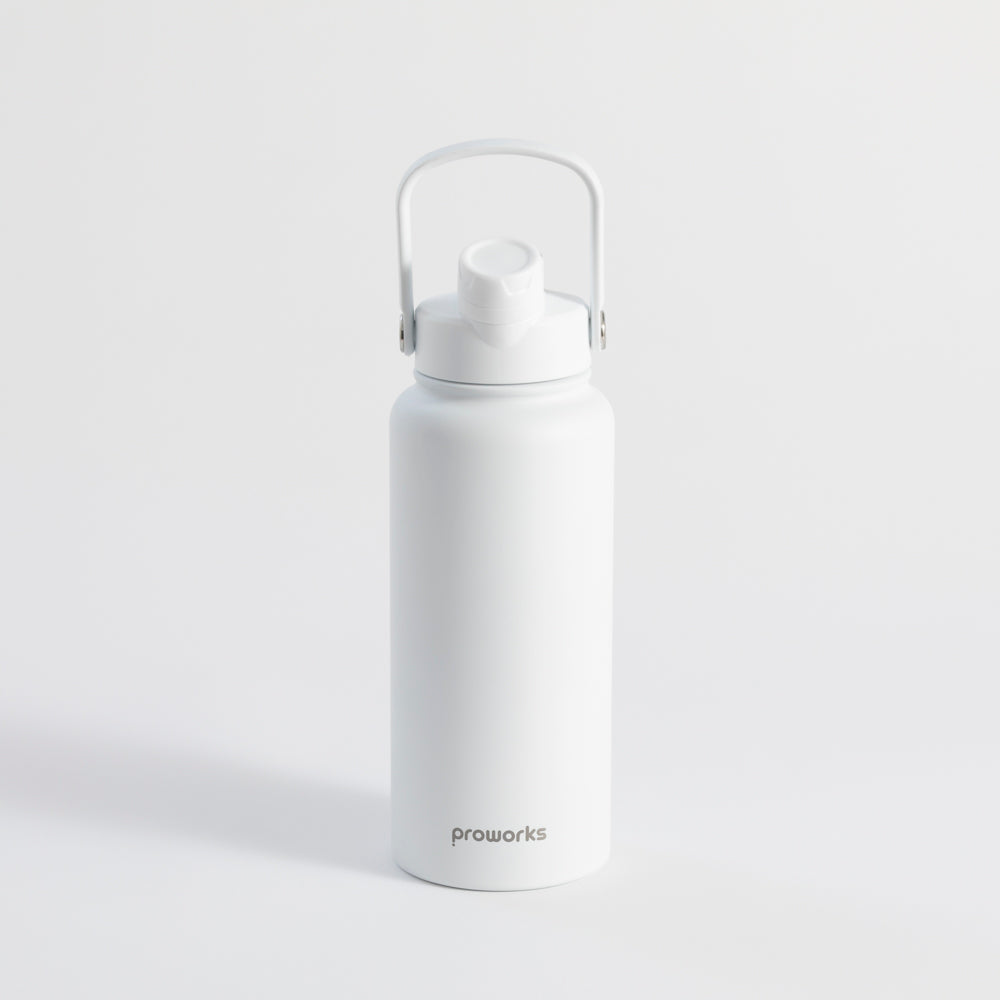

Prevent mould in your water bottle straw by following three daily habits: rinse the straw with warm water after every use, leave the lid open overnight so everything air dries completely, and do a weekly deep clean with warm water and bicarbonate of soda. Choosing a stainless steel bottle with a removable straw, like the ProWorks Switch, makes the process far simpler because the straw lifts out for thorough cleaning.
Mould in a water bottle straw is not inevitable. It is the result of a simple equation: moisture plus warmth plus time equals mould growth. Remove any one of those three elements and mould cannot establish itself. The good news is that prevention is far easier than removal, and it takes less than a minute a day.
If you have already found mould in your straw, our mould removal guide covers how to deal with it. This article is different. This is about stopping mould before it ever appears. We cover the daily routine, the drying techniques, the weekly deep clean, and the material choices that make mould a non-issue. For a broader straw cleaning routine, our complete straw cleaning guide is also worth reading.
Understanding why mould appears helps you prevent it. Mould spores are everywhere in the air around us. They are microscopic, invisible, and constantly looking for a place to land and grow. For mould to take hold, it needs three conditions: a moist surface, warmth, and organic matter to feed on.
A water bottle straw provides all three. The inside of the straw stays damp after drinking. The narrow tube traps moisture that cannot evaporate easily. Your mouth introduces saliva, which contains proteins and sugars that serve as food for mould. And a sealed bottle sitting at room temperature creates the warm, still environment that mould thrives in.
The narrow diameter of straws is the main culprit. Unlike the wide opening of the bottle itself, which dries relatively quickly when left open, the straw's interior retains moisture for hours or even days. This is why mould appears in straws far more often than in the bottle body. It is also why the prevention strategy focuses heavily on drying the straw thoroughly.
Prevention does not require elaborate effort. A simple daily habit is all it takes. Follow this routine every evening after you finish using your bottle for the day.
Pour out any remaining water. Run warm tap water through the bottle and through the straw. Hold the straw under the running tap so water flows through its entire length, flushing out any saliva or residue from the day. Do not use cold water for this step. Warm water dissolves residue more effectively.
Pull the straw out of the lid. This is critical. A straw left inside a sealed lid traps moisture in the connection point where the straw meets the lid mechanism. Removing it allows air to reach every surface. Bottles with removable straws, like the ProWorks flip straw range, are designed for this. The straw lifts out easily and snaps back in the next morning.
Place the bottle upside down on a drying rack or a clean tea towel with the lid off. Lay the straw next to it. Leave the lid open and unassembled. The goal is maximum airflow to every surface. Overnight drying in a well-ventilated kitchen is usually sufficient to eliminate all moisture by morning.
That is it. Thirty seconds of effort prevents mould from ever gaining a foothold. The key is consistency. Do this every day, not just when you remember.
Drying is the single most important factor in mould prevention. A dry straw cannot grow mould, full stop. Here are the most effective methods.
The simplest method. After rinsing, place the bottle upside down on a drying rack so gravity pulls water out of the opening. Lay the straw flat on the rack next to it. Overnight in a room with reasonable ventilation, everything dries completely. Avoid drying in a closed cupboard, as the lack of airflow keeps moisture trapped.
For the straw specifically, roll a small piece of kitchen paper into a tight cylinder and push it through the straw using a thin brush handle or chopstick. The paper absorbs residual moisture from the inner walls. This is especially useful if you need the straw to be dry quickly, rather than waiting for overnight air drying.
The daily rinse handles surface residue. A weekly deep clean goes further, eliminating any microscopic build-up that rinsing alone cannot reach.
Dissolve one teaspoon of bicarbonate of soda in a cup of warm water. Submerge the straw in the solution for 15 to 20 minutes. The bicarbonate creates a mildly alkaline environment that kills mould spores and dissolves organic residue. After soaking, run a thin bottle brush through the straw, rinse with clean water, and air dry as usual.
Mix equal parts white vinegar and warm water. Submerge the straw for 15 minutes. Vinegar is a natural antimicrobial that breaks down biofilm, the invisible layer of bacteria that can coat the inside of straws over time. After soaking, rinse thoroughly with warm water to remove the vinegar taste, then dry completely.
Do not forget the lid. The flip mechanism, the seal, and the straw housing all accumulate moisture and residue. Disassemble the lid as much as the design allows. Soak the components in your chosen cleaning solution alongside the straw. Use a small brush, such as a clean toothbrush, to scrub around seals and grooves where residue collects. Rinse and dry everything before reassembling.
The material of your water bottle plays a significant role in mould prevention. Stainless steel has inherent properties that make it far more resistant to mould than plastic.
Plastic is porous at a microscopic level. Over time, tiny scratches and surface degradation create crevices where mould can take root. These micro-scratches are invisible to the naked eye but provide a textured surface that mould spores cling to. Once established in these crevices, mould becomes extremely difficult to remove fully, even with thorough cleaning.
Stainless steel, by contrast, has a smooth, non-porous surface. Mould spores have nothing to grip onto. A simple wash removes everything from the surface because there are no microscopic hiding places. This is why medical and food preparation equipment is made from stainless steel: it is inherently more hygienic than any plastic alternative.
The same principle applies to the straw. A stainless steel or silicone straw resists mould better than a plastic one. The ProWorks Switch bottles use a silicone straw that is smooth, non-porous, and easy to clean, giving mould far fewer opportunities to establish itself. Browse the full water bottle with straw collection to see the range.
Even with a good routine, it is worth knowing what to look for so you catch any issues early.
Catching these signs early means a deep clean resolves the issue. Ignoring them leads to established mould that requires more aggressive treatment.
A well-maintained straw lasts a long time, but it does not last forever. Here are the indicators that it is time for a replacement.
Most quality silicone straws last 6 to 12 months with daily use and proper care. Replacing the straw is inexpensive and ensures your hydration setup stays hygienic.
The design of your bottle directly affects how easy it is to prevent mould. Bottles with removable straws are dramatically easier to keep clean than bottles where the straw is permanently fixed into the lid.

The Arctic White finish has a practical advantage for hygiene: you can see any discolouration immediately. Against the light exterior, any staining on the lid area is visible at a glance, giving you an early warning to clean. The straw pulls out of the lid with a simple tug, making the daily rinse and weekly soak effortless. The stainless steel body is non-porous and wipes clean without absorbing stains or odours.

The Sage Green Switch shares the same removable straw design that makes daily cleaning a 30-second task. The powder-coated stainless steel exterior is smooth and non-porous, so it does not harbour bacteria on its surface. The wide mouth opening allows you to reach inside with a bottle brush for thorough cleaning, and the lid disassembles for complete access to every seal and groove.
Removable straw for easy cleaning. Stainless steel that resists mould. The ProWorks Switch from £25.
Shop Now