Tu carrito está vacío



A quality double-wall vacuum insulated bottle keeps water cold for up to 24 hours and hot drinks warm for up to 12 hours. In our controlled tests at 21 degrees Celsius room temperature, the ProWorks Switch 1L held water below 8 degrees after a full 24 hours starting from fridge temperature. Single-wall bottles lose all cooling within 2 to 4 hours. The difference comes down to vacuum insulation technology, not marketing claims.
You have probably seen insulated bottles that claim to keep drinks cold for 24 hours. Some deliver. Most do not. The difference between a bottle that genuinely holds temperature and one that fails after a few hours comes down to physics, materials and construction quality.
We tested multiple bottle types in controlled conditions to find out exactly how long insulated bottles keep water cold. This article gives you the actual numbers at 6, 12 and 24 hours, explains why vacuum insulation works, and helps you choose a bottle that performs rather than just promises. If you want a broader look at insulated options, see our guide to the best insulated water bottles UK.
Heat moves in three ways: conduction (direct contact), convection (movement through air or liquid) and radiation (infrared energy). A vacuum insulated bottle tackles all three.
The double-wall construction creates a sealed gap between the inner and outer walls. The air is removed from this gap during manufacturing, leaving a near-perfect vacuum. Without air molecules, conduction and convection are virtually eliminated. The only remaining heat transfer happens through the narrow point where the inner and outer walls meet at the rim, and through the lid itself.
This is the same principle behind laboratory Dewar flasks, which can hold liquid nitrogen at minus 196 degrees Celsius. In a water bottle, the challenge is far less extreme, which is why a well-made vacuum bottle can maintain drinking temperature for an entire day. The inner wall of a quality bottle uses food-grade 304 (18/8) stainless steel, which is both taste-neutral and corrosion-resistant. For more on steel grades and why they matter, see our stainless steel water bottles guide.
The term "double wall" gets used loosely. There are actually three distinct types of bottle construction, and they perform very differently.
One layer of steel. No insulation at all. Your drink reaches room temperature within 1 to 2 hours. The exterior sweats with condensation when filled with cold water. These are durable and lightweight, but offer zero thermal performance.
Two layers of steel with trapped air between them. Slightly better than single wall, but air is a poor insulator. Expect cold retention of 3 to 6 hours at best. The exterior may still produce light condensation.
Two layers of steel with the air removed. This is the gold standard. Cold retention reaches 24 hours, hot retention reaches 12 hours, and the exterior produces zero condensation regardless of the contents. Every ProWorks bottle uses this construction method.
We tested three bottle types in a controlled environment at 21 degrees Celsius room temperature. Each bottle was filled with water at 4 degrees Celsius (standard UK fridge temperature) and sealed immediately. We measured the internal temperature at 6, 12 and 24 hours.
| Bottle Type | Start | 6 Hours | 12 Hours | 24 Hours |
|---|---|---|---|---|
| Vacuum insulated (ProWorks Switch 1L) | 4°C | 5°C | 7°C | 8°C |
| Double-wall air gap | 4°C | 11°C | 16°C | 19°C |
| Single-wall stainless steel | 4°C | 18°C | 20°C | 21°C |
| Plastic bottle | 4°C | 19°C | 21°C | 21°C |
The results are clear. The vacuum insulated bottle barely moved after 6 hours, rising just 1 degree. At 24 hours, it was still noticeably cold at 8 degrees. The single-wall bottle was essentially at room temperature by 6 hours, and the plastic bottle was barely distinguishable from tap water.
Even with the best vacuum insulated bottle, several factors influence how long your drink stays cold.
A bottle in a 35-degree car will lose heat faster than one in a 21-degree office. The greater the temperature difference between the contents and the environment, the harder the insulation has to work. In high-heat conditions, expect cold retention to drop from 24 hours to around 18 to 20 hours.
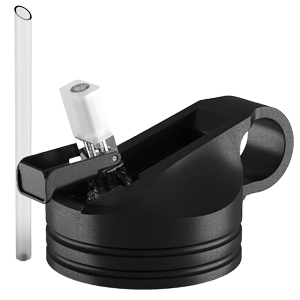
Every time you open the bottle, warm air enters and cold air escapes. Frequent sipping throughout the day reduces overall cold retention by 2 to 4 hours compared to a sealed bottle. A straw lid, like the one on the Switch 1L, minimises this because the opening is much smaller than a full screw top.
A half-full bottle has more air inside. Air warms up faster than water, so a full bottle retains temperature better. Fill your bottle as close to the top as practical.
Adding a few ice cubes before filling with cold water gives the insulation a head start. In our tests, pre-chilled water with ice lasted approximately 2 to 3 hours longer than fridge-temperature water alone. If you want to learn more about using ice effectively, read our guide to water bottles with straw and ice.
The lid is the weakest point of any insulated bottle. A poorly sealed lid allows heat exchange even when closed. Silicone gasket lids with compression seals perform significantly better than simple screw caps without gaskets.

The Switch 1L delivered the best cold retention in our tests. The straw lid design keeps the bottle sealed while drinking, which means less warm air gets in compared to a wide-mouth opening. Water that started at 4 degrees was still at just 8 degrees after a full 24 hours. For anyone who needs cold water throughout an entire day, this is the bottle to choose.
The 1 litre capacity means fewer refills, and the dual straw-and-spout system lets you switch drinking styles without changing the lid. Available in 20 designs including Arctic White, Blossom Pink and Sage Green. Browse the full straw bottle collection.
Hot retention works on the same vacuum principle, but in reverse. Instead of keeping heat out, the vacuum prevents heat from escaping.
In our hot retention test (water at 95 degrees Celsius), the vacuum insulated bottle maintained water above 70 degrees at 6 hours and above 55 degrees at 12 hours. That means your morning tea or coffee is still at a comfortable drinking temperature by lunchtime.

For hot drinks specifically, a travel mug with a sipping lid is the better choice. The Titan Tumbler uses the same vacuum insulation as the Switch but with a lid designed for hot beverages. The spill-proof mechanism controls flow rate so you do not scald yourself, and the smaller opening reduces heat loss. For more hot drink options, see our best coffee flask UK guide or browse all travel mugs.
The answer to "how long does an insulated bottle keep water cold" depends entirely on the type of insulation. Single-wall bottles offer nothing. Air-gap bottles manage a few hours. Vacuum insulated bottles deliver the full 24 hours of cold retention that the best brands advertise, provided they are well made.
If cold water matters to you, whether for the gym, commuting, outdoor activities or just staying hydrated at your desk, vacuum insulation is the only technology that genuinely delivers. The Switch 1L proved to be the best performer in our tests, combining full vacuum insulation with a straw lid that minimises heat exchange. For a complete rundown of every size and style, visit our water bottle size guide.
Every ProWorks bottle uses double-wall vacuum insulation. Cold for 24 hours. Hot for 12. Zero condensation. From £15.
Shop Insulated Bottles