Your Cart is Empty

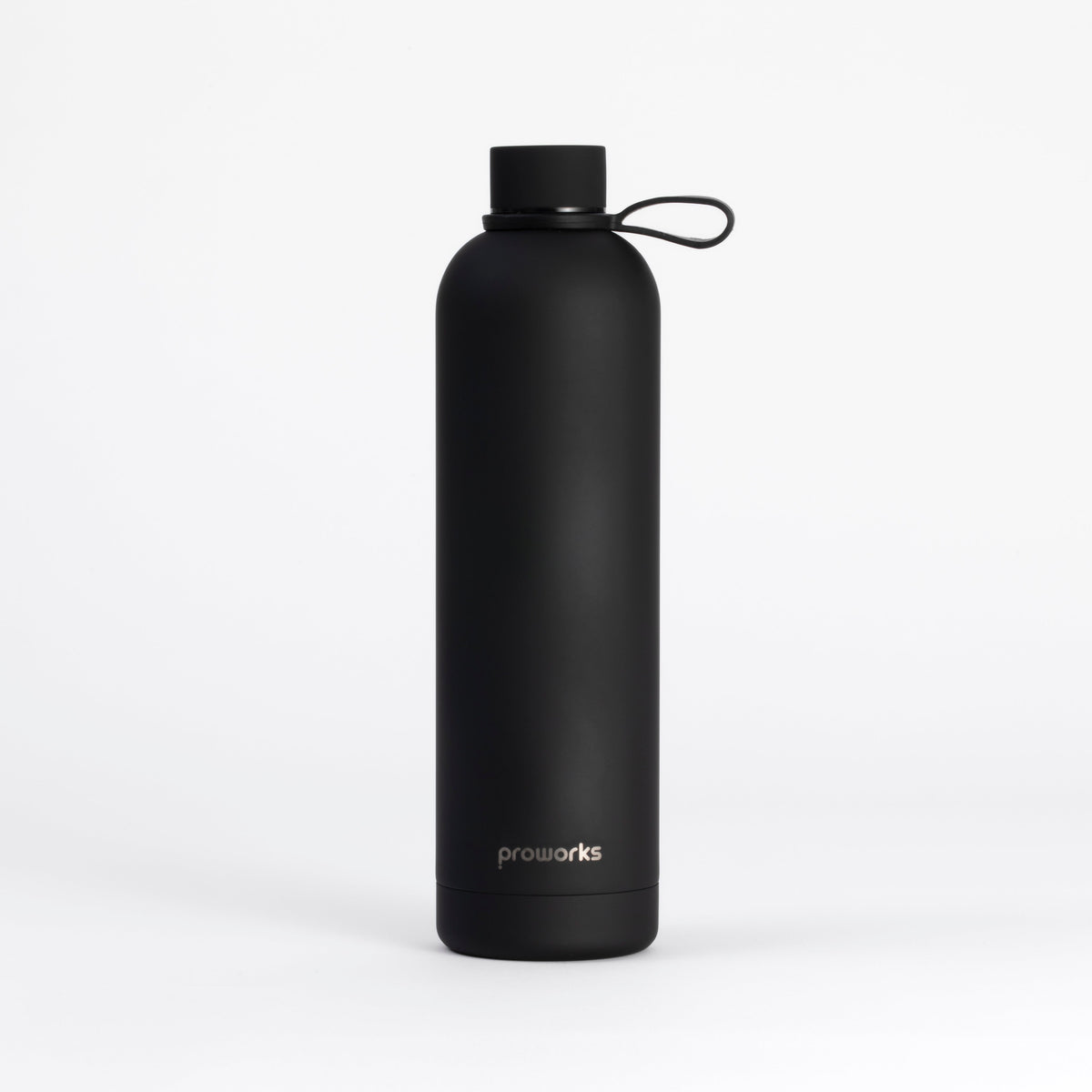

The best water bottle for tracking your daily intake in 2026 is the ProWorks Pulse 1L (£18). Whilst printed time markings on plastic bottles fade and peel within months, a quality stainless steel metal water bottle paired with a simple tracking habit keeps you hydrated for years. Fill it twice, hit your 2L target, done.
If you have searched for "water bottle with time markings," you already know the problem: staying hydrated throughout the day is harder than it sounds. Having a visual reminder on your bottle feels like the obvious solution. But there is a reason you keep seeing the same cheap plastic bottles dominating this space.
We tested time-marked water bottles alongside premium stainless steel alternatives over several months. The results were clear. Printed time markings fade, peel, and crack. The bottles themselves scratch, absorb odours, and end up in the bin within a year. Meanwhile, a quality metal water bottle paired with any of the five tracking methods we cover below delivers the same accountability without the compromises.
This guide breaks down exactly why time markings fail, what works better, and which stainless steel bottles make the best hydration tracker bottles for daily use in the UK.
The concept is sound. Print hourly time slots down the side of a bottle. Drink to the next line by the next hour. Hit your daily target by 8pm. In theory, a motivational water bottle with time markings turns hydration into a visible, structured habit.
In practice, the execution falls apart. Here is what actually happens.
Most time-marked water bottles use screen-printed or pad-printed markings on the outside of a plastic shell. These inks are not designed to withstand daily handling, bag friction, and repeated washing. Within 8 to 12 weeks of regular use, the time markings become partially illegible. Within six months, some bottles lose the markings entirely. You are left with a plain plastic bottle that cost more than it should have.
To make the time markings visible, these bottles almost always use clear or translucent plastic, typically BPA-free Tritan or similar copolyester. The material is lightweight, yes. But it scratches easily, develops hairline cracks around the lid thread, and can absorb flavours over time. Compared to stainless steel, the lifespan is dramatically shorter.
Pre-printed time markings assume you start drinking at a specific hour, usually 7am or 8am, and finish by a set time. But if you wake at 6am, work night shifts, or simply have an irregular schedule, the printed times are irrelevant the moment you buy the bottle. A rigid schedule printed permanently on plastic cannot adapt to real life.
Many time-marked water bottles add phrases like "Keep Going!" or "Almost There!" alongside the hour markings. These feel encouraging on day one. By week three, they feel like clutter. By month three, the messages have usually faded along with the time lines, leaving you with a bottle that looks worn and cheap.
Once you separate the tracking method from the bottle, the comparison becomes straightforward. A stainless steel water bottle outperforms a time-marked plastic bottle on every metric that matters for daily hydration.
A quality 304 stainless steel bottle, such as the ProWorks Pulse or Switch, is built to last 5 to 10 years of daily use. There are no printed markings to fade, no plastic to crack, and no surface to scratch through. Drop it, throw it in a gym bag, wash it daily. The bottle looks and performs the same in year three as it did on day one.
Plastic time-marked bottles offer zero insulation. Your water is room temperature within an hour on a warm day. A double-wall vacuum insulated metal water bottle keeps water cold for up to 24 hours and hot drinks warm for 12 hours. If you are tracking intake throughout the day, your water actually stays cold and drinkable from morning to evening.
For a deeper comparison of insulated performance, see our guide to the best insulated water bottles in the UK.
Every plastic bottle, even BPA-free ones, raises legitimate questions about microplastic leaching, particularly when exposed to heat or sunlight. Stainless steel is completely inert. Food-grade 304 steel does not leach chemicals, does not absorb odours, and does not affect the taste of your water. It is the same material used in commercial kitchens and medical equipment.
A plastic time-marked bottle that lasts six months gets replaced twice a year. Over five years, that is ten bottles in landfill. A single stainless steel bottle replaces all of them. It is 100% recyclable at end of life, and the manufacturing footprint is offset within the first year of use compared to buying disposable or semi-disposable plastic alternatives.
This matters more than people admit. A faded, scratched plastic bottle with peeling motivational quotes does not inspire you to drink more water. A clean, well-built stainless steel bottle in matte black or sage green looks intentional. It sits on your desk, in your gym bag, or in your hand without looking like a novelty item that should have been binned three months ago.
If you are looking for a water bottle with time markings, you are really looking for a bottle that helps you hit your daily intake target. These three stainless steel bottles do that job better than any printed plastic alternative, and they will still be doing it years from now.

Carbon Black | Best for Daily Tracking
 water bottle with straw lid in stealth black" loading="lazy">
Stealth Black | Best Straw Lid for Sipping

Green | Best for All-Day Hydration
You do not need time markings printed on a bottle to track your hydration. These five methods are more flexible, more accurate, and work with any bottle you own, including stainless steel.
This is the simplest approach and the one we recommend most. Pick a bottle with a known capacity (a 1 litre bottle is ideal) and count your refills. Two fills of a 1L bottle equals your 2L daily target. Three fills of a 750ml gets you to 2.25L. No apps, no gadgets, no fading ink. Just simple maths.
Place two or three rubber bands around the base of your bottle at the start of each day. Every time you finish a full bottle and refill, move one band from the base to the neck. When all bands are at the top, you have hit your target. It is tactile, visual, and costs nothing. This method works particularly well with stainless steel bottles because the bands grip the powder-coated surface firmly.
Set recurring reminders on your phone at 90-minute intervals throughout the day. Each reminder prompts you to check your bottle and take a drink. This method works best for people who get absorbed in work and forget to drink entirely. Most smartphones let you create repeating reminders in under a minute, and you can adjust the intervals to match your schedule, something a printed time-marked water bottle can never do.
Apps like WaterMinder, Drink Water Reminder, and the built-in health apps on iOS and Android let you log every glass or bottle with a single tap. Many sync with smartwatches and fitness trackers for automatic reminders. The advantage over printed time markings is flexibility. You can set custom targets, adjust for exercise days, track weekly trends, and get intelligent reminders based on your actual habits rather than a fixed schedule.
Divide your waking hours into blocks and assign a water intake target to each one. For example: 500ml before noon, 500ml between noon and 3pm, 500ml between 3pm and 6pm, and 500ml in the evening. This mirrors what time-marked bottles attempt to do, but you set the schedule yourself, adjust it whenever you need to, and it works with any water intake bottle. Write it on a post-it, set it as a phone wallpaper, or simply memorise it.
Here is a direct, honest comparison between a typical time-marked plastic water bottle and a stainless steel alternative like the ProWorks Pulse.
| Feature | Time Marked Plastic | ProWorks Stainless Steel |
|---|---|---|
| Material | BPA-free plastic (Tritan) | Food-grade 304 stainless steel |
| Typical Price | £8 - £15 | From £18.00 |
| Realistic Lifespan | 3 - 6 months | 5 - 10+ years |
| Insulation | None | 24hrs cold / 12hrs hot |
| Time Markings | Printed (fades in 8-12 weeks) | Not needed (use tracking methods above) |
| Chemical Safety | BPA-free, but microplastic concerns | Completely inert, no leaching |
| Odour Retention | Absorbs flavours over time | No odour or taste transfer |
| Scratch Resistance | Scratches easily, looks worn quickly | Durable powder coat finish |
| Eco Impact | Replaced multiple times per year | One bottle, years of use |
| 5-Year Cost | £80 - £150 (replacing every 6 months) | £18 - £25 (one purchase) |
The maths is straightforward. A time-marked plastic water bottle might cost less upfront, but replacing it twice a year for five years costs four to eight times more than a single stainless steel bottle. And that is before factoring in insulation, chemical safety, and the environmental impact of throwing away plastic every few months.
Understanding your daily target is the foundation of any hydration tracking method. Without a clear number, no bottle, time-marked or otherwise, will make a meaningful difference.
The NHS recommends that adults in the UK drink 6 to 8 glasses of fluid per day, which works out to roughly 1.5 to 2 litres. This includes water, tea, coffee, and other non-alcoholic drinks. However, the actual amount you need depends on several factors.
The simplest check is urine colour. Pale straw or light yellow means you are well hydrated. Dark yellow or amber means you need to drink more. Other signs include headaches, fatigue, dry mouth, and difficulty concentrating. For a comprehensive breakdown of hydration science and its effects on your body, our guide to the benefits of drinking water covers everything from cognitive performance to skin health.
Your daily target determines the ideal bottle size. If you prefer fewer refills, go larger. If portability matters more, go smaller and refill more often. Our water bottle size guide breaks down exactly which capacity suits which lifestyle, from desk workers to marathon runners. For most people, a 1 litre water bottle is the ideal tracking companion: fill it twice and you have hit your 2L target. And if you are exploring options beyond time-marked bottles, our best reusable water bottles guide covers every material and style available in the UK.
Printed time markings fade. Quality stainless steel does not. Browse the full Pulse range and find the bottle that keeps you on track, today and for years to come.
Shop the Pulse Range