FREE UK DELIVERY OVER £25

0

Your Cart is Empty

How to Remove Smell from a Water Bottle: 6 Methods That Actually Work (2026)

March 16, 2026 7 min read

How to Remove Smell from a Water Bottle: 6 Methods That Actually Work (2026)
Quick Answer

The fastest way to remove smell from a water bottle is to fill it with warm water and one tablespoon of bicarbonate of soda, leave it overnight, then rinse thoroughly. For stubborn odours, try a 50:50 white vinegar soak, denture tablets, or the rice scrub method. Always clean the lid and gasket separately, as these are the most common source of persistent smells. A stainless steel bottle resists odour better than plastic.

6 Proven Methods
Overnight Bicarb Soak Time
#1 Cause Biofilm Buildup
304 SS Resists Odour Best

A smelly water bottle is one of the most common reasons people stop using their reusable bottle. But the smell is almost always fixable with household items you already own. The key is understanding what causes the odour and choosing the right method to eliminate it.

This guide covers six specific methods that work, ordered from the most common and effective to specialist approaches for particularly stubborn cases. For a full cleaning routine, see our stainless steel cleaning guide. For food flask odours, read our food flask cleaning guide.


Why Water Bottles Develop Smells

The smell inside your bottle is almost always caused by bacteria. Specifically, it is caused by biofilm: a thin, invisible layer of bacteria that adheres to surfaces and produces waste products that smell unpleasant.

Biofilm forms when:

  • The bottle is not cleaned thoroughly after use
  • Water is left sitting in the bottle for extended periods
  • The bottle is sealed while still wet inside
  • The lid gasket retains moisture in its crevices
  • Drinks other than water (juice, squash, coffee) leave residue that feeds bacteria

Stainless steel is naturally more resistant to biofilm than plastic because its smooth, non-porous surface gives bacteria fewer places to anchor. However, any bottle will develop odours if not cleaned properly. The material matters, but so does the routine.


Method 1: Bicarbonate of Soda Soak

Best for: Most odours. This should be your first attempt.

  1. Add one tablespoon of bicarbonate of soda to the empty bottle.
  2. Fill with warm water (not boiling) to the top.
  3. Leave overnight, or for at least 4 to 6 hours.
  4. Scrub the interior with a bottle brush, focusing on the base and waterline.
  5. Rinse thoroughly with warm water at least three times.
  6. Air dry upside down with the lid off.

Bicarbonate of soda is mildly alkaline, which neutralises the acids produced by odour-causing bacteria. It also has mild abrasive properties that help lift biofilm from the surface without scratching the stainless steel.


Method 2: White Vinegar Soak

Best for: Mineral deposits, limescale, and odours that survive the bicarb method.

  1. Mix a solution of 50% white vinegar and 50% warm water.
  2. Fill the bottle with the solution.
  3. Leave for 1 to 2 hours (or overnight for severe cases).
  4. Scrub with a bottle brush.
  5. Rinse at least three times with warm water.
  6. Air dry with the lid off.

White vinegar is acidic, which dissolves mineral deposits and kills many types of bacteria. The vinegar smell dissipates completely after thorough rinsing. If it lingers, do a quick follow-up rinse with warm water and a drop of washing-up liquid.


Method 3: Denture Cleaning Tablets

Best for: Stubborn odours and stains that resist bicarb and vinegar.

  1. Fill the bottle with warm water.
  2. Drop in one or two denture cleaning tablets (available from any supermarket or pharmacy).
  3. Leave for 30 minutes to 1 hour. The tablets will fizz as they work.
  4. Scrub with a bottle brush.
  5. Rinse thoroughly and air dry.

Denture tablets contain sodium bicarbonate and citric acid, which together create an effervescent cleaning action that reaches areas a brush cannot. They are designed to remove biofilm from dental appliances, which makes them surprisingly effective for water bottles.


Method 4: Rice Scrub

Best for: Physical buildup on the interior that brushes cannot reach (common in bottles with narrow openings).

  1. Add 2 tablespoons of uncooked rice to the bottle.
  2. Add a squirt of washing-up liquid and fill one-third with warm water.
  3. Seal the lid and shake vigorously for 1 to 2 minutes.
  4. The rice acts as a natural abrasive, scrubbing the interior walls.
  5. Empty, rinse thoroughly, and air dry.

This method is particularly useful for bottles where a brush cannot reach the bottom or curved interior. The rice grains are hard enough to break up biofilm but too soft to scratch stainless steel.


Method 5: Bottle Brush Deep Scrub

Best for: Visible buildup or slime on the interior walls.

  1. Squirt washing-up liquid directly onto the bottle brush.
  2. Scrub the entire interior surface firmly, paying attention to the base, waterline, and rim.
  3. Use a small brush or old toothbrush on the thread area where the lid screws on.
  4. Rinse thoroughly and repeat if necessary.
  5. Air dry upside down.

A bottle brush should be part of your daily cleaning routine, but a dedicated deep scrub with extra pressure can remove established biofilm that soaking alone might not shift. Replace your bottle brush every 2 to 3 months, as the bristles wear and lose effectiveness.


Method 6: Sunlight and Fresh Air

Best for: A finishing step after one of the methods above, or for mild musty smells.

  1. After cleaning and rinsing, leave the bottle open and upside down in direct sunlight for several hours.
  2. UV light from the sun has natural antibacterial properties.
  3. The combination of UV exposure and airflow helps eliminate any remaining odour.

This is not a standalone solution for strong odours, but it is an excellent finishing step. It works particularly well in summer when UK sunshine is strongest. Even a windowsill with good light exposure will help.


Do Not Forget the Lid

In many cases, the smell is not coming from the bottle itself. It is coming from the lid. The silicone gasket, straw, and thread area of the lid are the most common hiding spots for odour-causing bacteria.

  • Remove the gasket and soak it in warm soapy water for 10 minutes.
  • Clean the straw with a dedicated straw brush.
  • Scrub the thread area with an old toothbrush.
  • Check for mould in any crevices, especially around flip-top mechanisms.

For straw-specific cleaning, see our guide on preventing mould in straw bottles.

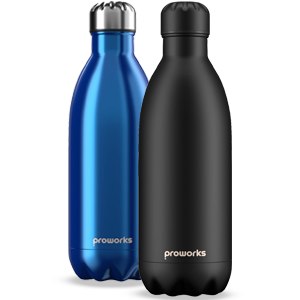
Odour Resistant ProWorks Switch 1L stainless steel water bottle in Stealth Black
ProWorks Switch 1L Stealth Black
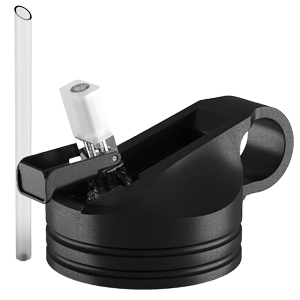
304 Stainless Steel, Removable Straw + Gasket
  • Material 304 stainless steel (odour-resistant)
  • Straw Fully removable
  • Gasket Removable silicone
  • Cold Retention 24 hours
£25.00
View Switch Stealth Black

Preventing Smells in the First Place

  • Wash daily: A quick wash with warm soapy water after every use prevents biofilm from forming.
  • Air dry with the lid off: Never seal a wet bottle. Moisture trapped inside a sealed bottle is where bacteria thrive.
  • Do not leave water sitting: If you are not going to drink the remaining water, empty the bottle.
  • Clean the lid weekly: Remove the gasket and clean all components separately.
  • Use stainless steel: Its non-porous surface resists odour absorption. Plastic absorbs and retains smells far more readily.
  • Stick to water: Juice, squash, and coffee leave residue that feeds bacteria. If you use other drinks, clean immediately after.

For a complete cleaning schedule, see our stainless steel cleaning guide.


Frequently Asked Questions

What is the fastest way to remove smell from a water bottle?
The fastest method is the bicarbonate of soda soak. Add one tablespoon of bicarbonate of soda to the bottle, fill with warm water, and leave for at least 4 hours (overnight is better). The bicarbonate neutralises odour-causing bacteria and acids. Scrub with a bottle brush, rinse thoroughly, and air dry with the lid off. This method works for the vast majority of bottle odours and uses an ingredient most UK households already have in the kitchen cupboard.
Why does my water bottle smell even though I wash it?
The most common reason is biofilm, an invisible layer of bacteria that adheres to surfaces and resists ordinary rinsing. Simple rinsing removes loose bacteria but not established biofilm. A proper clean requires warm soapy water with physical scrubbing using a bottle brush. The other common culprit is the lid gasket, which traps moisture and bacteria in its crevices. Remove the gasket weekly and clean it separately to prevent this buildup.
Do stainless steel bottles smell less than plastic?
Yes. Food-grade 304 stainless steel has a smooth, non-porous surface that resists bacteria adhesion and does not absorb odours. Plastic is porous at a microscopic level, meaning smells can become embedded in the material itself. A stainless steel bottle that is properly cleaned should never retain odour, whereas a plastic bottle may develop a permanent smell over time that no amount of cleaning can fully remove. This is one of the key reasons to choose stainless steel.
Can I use denture tablets to clean my water bottle?
Yes, and they are surprisingly effective. Denture cleaning tablets contain sodium bicarbonate and citric acid, which create an effervescent action that reaches crevices a brush cannot. Drop one or two tablets into a bottle of warm water, leave for 30 minutes to 1 hour, then scrub and rinse. They are widely available from supermarkets and pharmacies in the UK and are an excellent option for stubborn odours that survive other cleaning methods.
How does the rice scrub method work?
The rice scrub uses uncooked rice grains as a natural, non-damaging abrasive. Add 2 tablespoons of rice, a squirt of washing-up liquid, and fill one-third with warm water. Seal and shake vigorously for 1 to 2 minutes. The rice grains physically break up biofilm and residue on the interior walls, including areas that a bottle brush cannot easily reach. It is particularly effective for bottles with narrow openings or curved interiors.
How often should I deep clean my water bottle?
Deep clean your water bottle once a week using bicarbonate of soda or white vinegar. Between deep cleans, wash daily with warm soapy water and a bottle brush. If you use the bottle for anything other than water, such as juice, squash, or coffee, deep clean after every use of those drinks. Consistent weekly deep cleaning prevents odours from developing in the first place, which is much easier than trying to remove established smells.

The Bottom Line

A smelly water bottle does not need to be thrown away. In almost every case, the odour can be eliminated with bicarbonate of soda, white vinegar, or one of the four other methods in this guide. The key is treating the cause (biofilm) rather than just masking the symptom. Clean the lid gasket, use a bottle brush, and always air dry with the lid off.

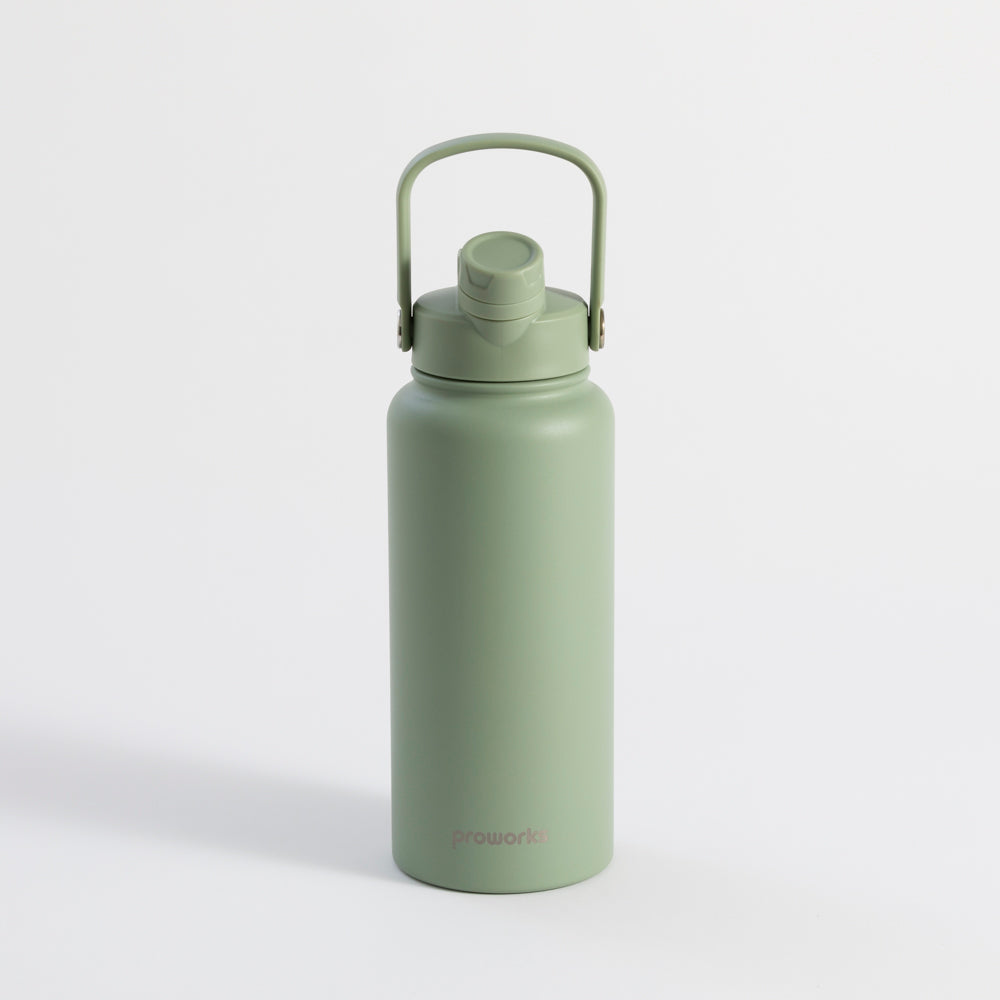
For a bottle that resists odours by design, the ProWorks Switch 1L uses food-grade 304 stainless steel with a fully removable straw and gasket for thorough cleaning. Available in Stealth Black, Arctic White, Sage Green, and Blossom Pink.

Fresh Bottles Start Here

304 stainless steel that resists odour and stains. Removable parts for easy cleaning. Free UK delivery.

Shop Stainless Steel Bottles