
Your Cart is Empty
























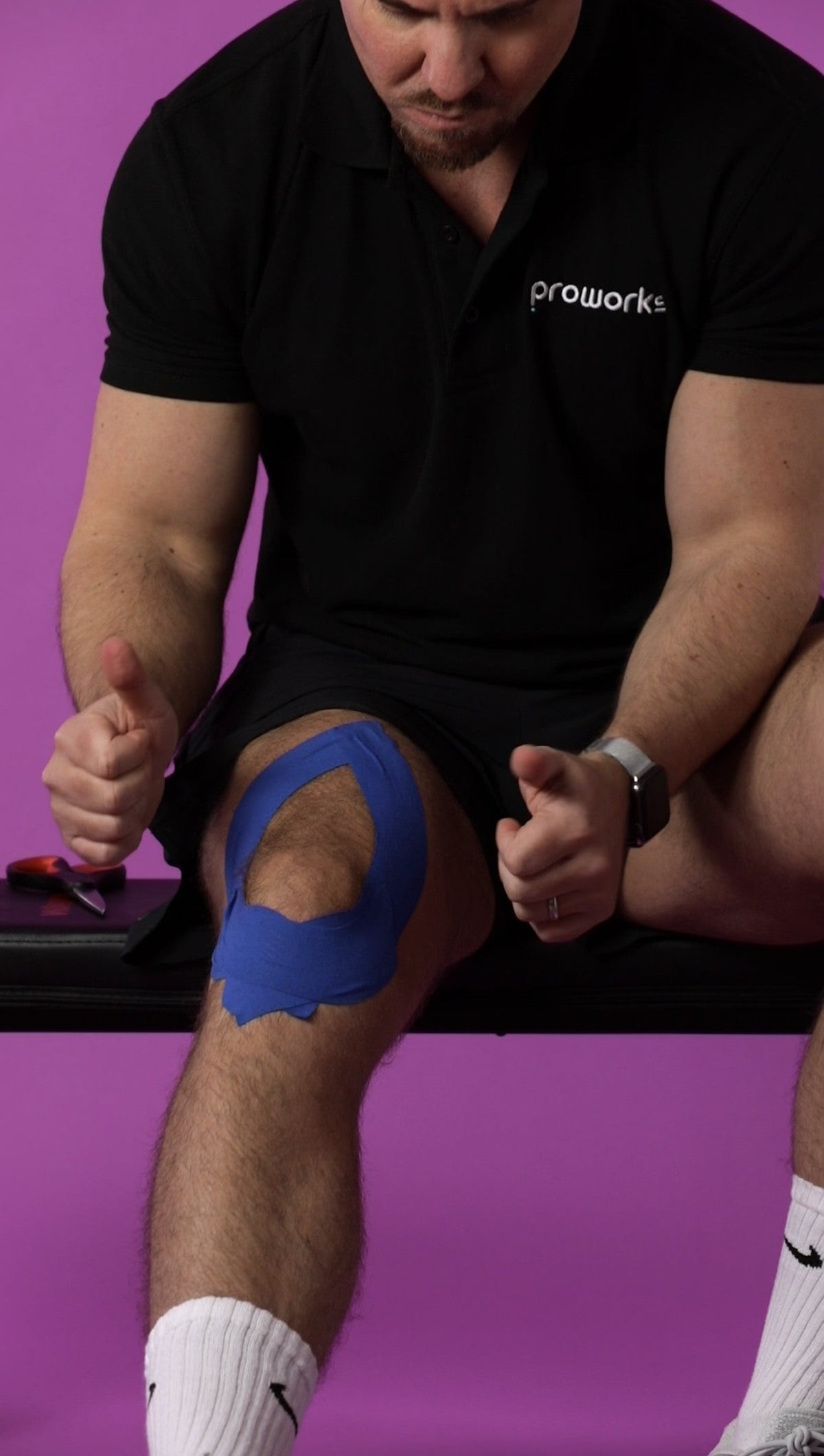

This guide shows exactly how to use kinesiology tape on your knee using the method shown in our own studio footage. Watch the short video first, then follow the 7 clear steps using the photos below.
Watch the knee application
This is our own footage, filmed with Proworks tape. Runtime 26 seconds.
Prefer YouTube? Watch this knee application on YouTube.
Open the full-screen knee video page · Shop Proworks kinesiology tape
If your injury is lower down the leg, our complete guide on how to tape a sprained ankle with kinesiology tape includes a full video tutorial and step-by-step photos to help you support the ankle as it heals.
How to Tape Your Knee (7 Simple Steps)
Follow the sequence below. Each photo shows the exact technique.
Step 1 - Prepare the first strip

Step 2 - Anchor below the kneecap

Step 3 - Guide the tape around the kneecap

Step 4 - Apply the stabilising strip

Step 5 - Add support across the patella

Step 6 - Smooth the tape to activate the adhesive

Step 7 - Finished taping

Jump to:
What Is Kinesiology Tape?
Kinesiology tape is a stretchy, breathable tape designed to support the knee without restricting movement. It mimics the elasticity of your skin so you can move naturally while moving with the joint rather than restricting it. It is widely used by athletes and runners during training and activity.
What kinesiology tape does
Kinesiology tape is elastic. It stretches and recoils with the skin, so it stays in place through movement rather than restricting it. What it can offer is light, flexible support that moves with you - it is not a brace and it is not a treatment.
Whether taping helps you personally is an individual thing. If knee pain is severe, followed an injury, or is not settling, see a qualified healthcare professional rather than relying on tape.
Where the tape goes on the knee
The application in our video uses three strips: one anchored below the kneecap and guided around it, one stabilising strip, and one laid across the top. That covers the area around and above the kneecap.
This guide shows a body area, not a diagnosis. It does not tell you whether taping is appropriate for a specific knee problem - that is a question for a qualified healthcare professional.
How to Apply Kinesiology Tape to Your Knee
See the 7 steps above for the full demonstration. Always apply tape to clean, dry skin.
Common Mistakes to Avoid
- Overstretching the tape
- Putting tension on the anchors
- Taping on wet or sweaty skin
- Not rounding the tape corners
- Wearing old, peeling tape too long
How Long Should You Wear Kinesiology Tape?
Proworks Kinesiology Tape lasts 3–5 days depending on training, sweat and showering. If the edges peel, trim them rather than removing the whole strip early.
Best Kinesiology Tape for Knee Support

Proworks Kinesiology Tape
Strong adhesive, flexible support and skin-friendly materials - designed for runners, gym training and everyday movement.
View ProductFrequently Asked Questions
Can you shower with kinesiology tape on?
Yes - Proworks Kinesiology Tape is water-resistant and stays on during showers.
Can I sleep with kinesiology tape on my knee?
Yes. As long as it feels comfortable and isn’t too tight, it’s safe.
Does kinesiology tape work immediately?
Some people notice the support straight away; others do not. It is a support product, so what it offers is physical support rather than a treatment effect.
Is kinesiology tape waterproof?
It’s water-resistant - suitable for sweat and showers but not for long swimming sessions.
Where does the tape go on the knee?
The application we filmed places strips around and above the kneecap. If you are unsure whether taping suits your knee, ask a qualified healthcare professional.
Can tape replace a knee brace?
No - it provides flexible support, not rigid stabilisation.