Your Cart is Empty

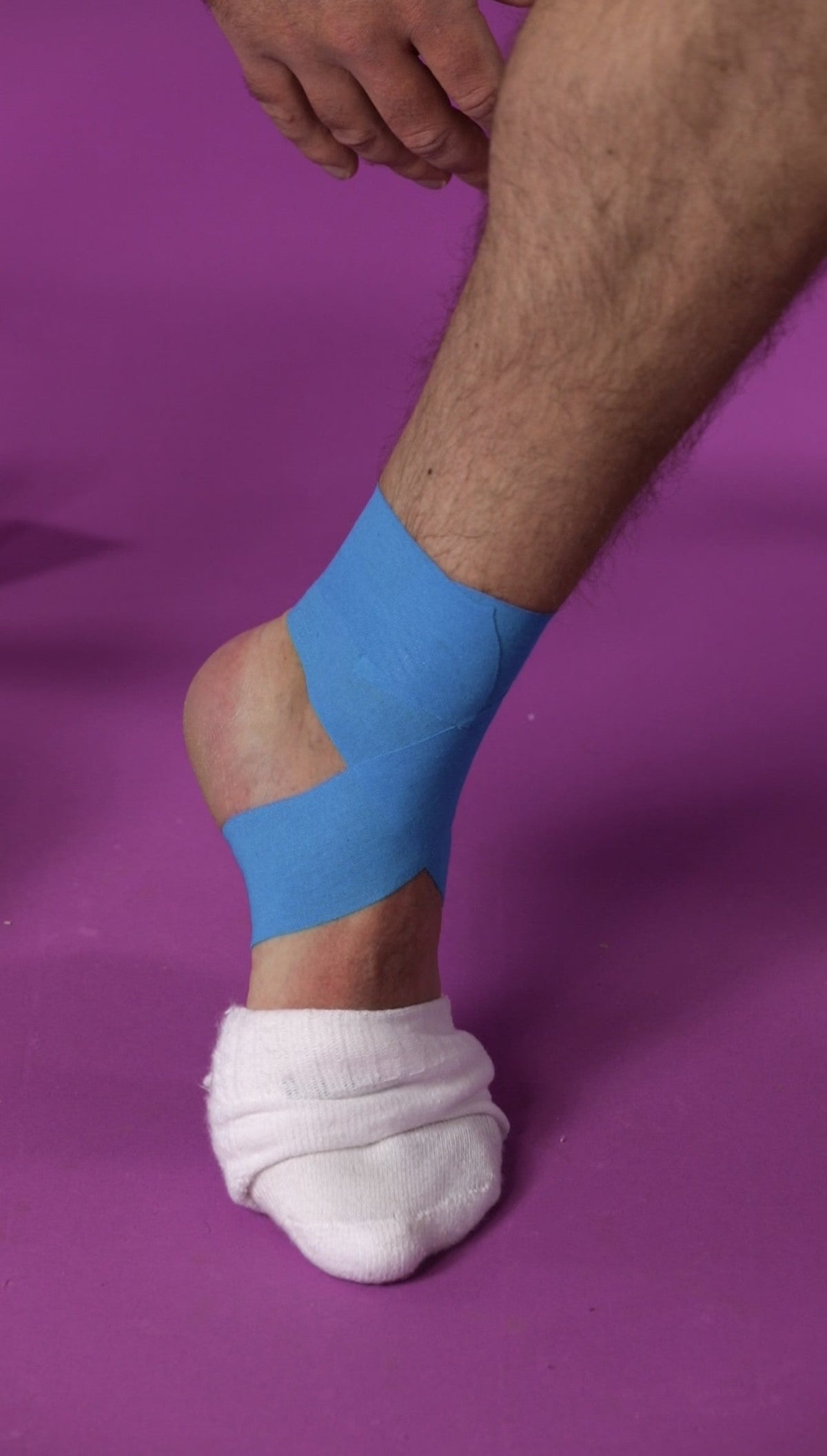

Sprained your ankle and want to get back on your feet as safely as possible? This step-by-step guide shows you exactly how to use Proworks kinesiology tape for a sprained ankle, using the same technique from our Proworkstapes videos.
This is our own footage, filmed with Proworks tape. Runtime 27 seconds.
Prefer YouTube? Watch this ankle application on YouTube.
Open the full-screen ankle video page · Shop Proworks kinesiology tape
Kinesiology tape will not fix an injury. What it can offer is light, flexible support that moves with the ankle rather than locking it rigid.
A sprained ankle happens when the ligaments that support your ankle joint are stretched or torn, usually when the foot rolls inwards or outwards. Most everyday sprains affect the lateral ligaments on the outside of the ankle.
Common symptoms include:
If you suspect a fracture or cannot put any weight on the foot, always seek urgent medical care.
If you’re dealing with general knee discomfort as well, our full guide on how to use kinesiology tape on your knee shows step-by-step instructions, video and photos to help you support and stabilise the joint safely.
Kinesiology tape is elastic. It stretches and recoils with the skin, so it can sit across the ankle and foot without fully restricting movement the way a rigid strapping would.
What it offers is light, flexible support. It is not a treatment, it does not replace rest, rehabilitation or professional advice, and it will not fix an injury. Whether taping is appropriate for your ankle is a question for a qualified healthcare professional - particularly after a sprain.
The full application is at the top of this guide. You can also open the full-screen video page or watch it on YouTube.
What you’ll need:
Important: This method is for mild to moderate ankle sprains. If you have severe pain, major swelling or suspect a fracture, get checked by a professional before taping.
Sit with your ankle relaxed and your foot in a neutral position (not fully pointed or pulled up).

Peel the backing away and apply the tape with light tension up the inside of the ankle, keeping the first and last 3–5 cm with no stretch.

Continue the strip diagonally across the front of the ankle with moderate stretch (around 50%), supporting the ligaments that are usually injured in a roll.

Bring the tape around the back of the ankle and up the outside, easing off the stretch as you approach the end. Stick the final section down with no tension.

Cut a second strip. Anchor it on the outside of the foot or mid-foot with no stretch, then pull it across the top of the foot towards the inside.

Guide the tape under the heel with moderate stretch, creating a supportive sling that helps limit excessive rolling.

Bring the strip up around the back of the ankle and onto the lower shin with light tension, finishing the last part with no stretch to avoid irritation.

Rub all of the tape gently but firmly from the centre outwards. The warmth from your hands helps activate the adhesive so it lasts longer.

Stand up carefully and gently shift your weight. You should feel supported but still able to move the ankle comfortably.

Tip: Wait at least 30–45 minutes before intense activity so the tape can fully bond to the skin.
Always seek medical advice if:
Tape is a support product. Any rehabilitation plan should come from a physiotherapist or sports therapist.
Most people wear kinesiology tape for 3–5 days. Remove it sooner if the skin feels itchy, hot or irritated.
Yes. Proworks kinesiology tape is water-resistant and designed to be worn during daily life, training and light sport. Pat dry after showering rather than rubbing.
Yes. Tape helps you move more comfortably but it does not mean the injury has fully healed. Follow medical advice on rest, rehab exercises and return to sport.